
For years, referral relationships were the lifeblood of many addiction treatment centers. A handful of trusted therapists, hospitals, interventionists, EAPs, physicians, and fellow providers could consistently send qualified admissions. That model worked when competition was smaller, patient choice was more limited, and most referrals happened within professional networks. At The Rehab SEO Specialists, we’ve seen firsthand how dramatically this landscape has evolved, requiring treatment providers to rethink how they attract and convert prospective patients.
Today, that reality has changed.
Families now research treatment centers extensively before making a call. Even when someone receives a referral from a trusted clinician, they often search Google, compare reviews, visit multiple websites, ask AI tools for recommendations, and evaluate whether a program feels credible. A referral may introduce your organization, but it rarely closes the admission on its own. This shift is why The Rehab SEO Specialists helps addiction treatment centers build a strong digital presence that reinforces the trust established through professional referrals.
Treatment centers that continue relying primarily on referral relationships risk creating an admissions pipeline they do not fully control. Sustainable growth now requires a diversified visibility strategy that combines professional partnerships with digital authority, local search visibility, trust-building, and a patient experience that supports confident decision-making. The Rehab SEO Specialists works with treatment providers to strengthen each of these areas, helping organizations build a more resilient admissions strategy that isn’t dependent on a single source of new clients.
The Referral Model Has Changed
Referral relationships remain valuable.
They are simply no longer sufficient.
Several shifts have fundamentally changed how people choose addiction treatment.
First, the number of treatment providers has increased dramatically in many markets. Families often have dozens or even hundreds of options within driving distance.
Second, insurance participation has become more complex. Referral partners frequently need multiple treatment options depending on network participation, clinical specialty, geographic location, or bed availability.
Third, families have become sophisticated researchers.
Instead of accepting the first recommendation they receive, many spend hours researching:
- Reviews
- Clinical credentials
- Licensing
- Success stories
- Treatment philosophies
- Levels of care
- Staff experience
- Facility photos
- Google Maps listings
- AI-generated summaries
The referral starts the conversation.
Digital visibility often determines who earns the admission.
What Are Referral Relationships?
Referral relationships are professional partnerships that generate patient recommendations from trusted sources such as therapists, hospitals, physicians, behavioral health providers, interventionists, employee assistance programs, and community organizations.
While these relationships remain an important admissions channel, they work best when supported by a strong online presence that reinforces credibility and trust.
Why Referral Relationships Matter
Referral relationships provide qualified leads, strengthen professional credibility, and often produce patients with appropriate clinical needs.
However, referrals are vulnerable to changes outside your control, including staffing changes, organizational mergers, insurance shifts, and evolving provider preferences.
The strongest treatment organizations build referral networks while simultaneously investing in digital visibility that consistently attracts new families.
The Hidden Risk of Depending on Referrals
One of the biggest operational risks is concentration.
Imagine 70 percent of admissions coming from five referral partners.
Now imagine:
- One therapist retires.
- A hospital changes ownership.
- An insurance contract changes.
- A behavioral health system opens its own treatment program.
- A competitor hires your largest referral source.
Your admissions pipeline changes overnight.
Unlike owned marketing assets such as your website, Google Business Profile, local SEO presence, educational content, and organic search rankings, referral relationships are not entirely under your control.
That makes diversification essential.
Families Rarely Stop at the Referral
One pattern appears repeatedly across behavioral health admissions.
A family receives a recommendation.
Then they immediately search online.
Their questions are remarkably consistent:
- Is this treatment center legitimate?
- What do former patients say?
- Do they treat co-occurring disorders?
- Is detox available?
- What does residential treatment look like?
- How experienced is the clinical team?
- Do they accept our insurance?
- Are they close to home?
- Should we consider another provider?
Even if your organization was personally recommended, your online presence now serves as the second interview.
Weak visibility creates doubt.
Strong visibility reinforces confidence.
How Search Behavior Has Changed
Families no longer rely on one source of information.
They move fluidly between platforms.
A typical journey may include:
- Google Search
- Google Maps
- Google Reviews
- AI-generated summaries
- Treatment directories
- YouTube videos
- Social media
- News coverage
- Your website
- Third-party mentions
This behavior has significant implications for admissions.
Your organization needs to appear consistently credible wherever people encounter your brand.
How AI Is Reshaping Treatment Discovery
AI search experiences are becoming another layer of patient research.
Instead of typing only keywords, people ask questions like:
- Which rehab centers specialize in trauma?
- What are the best dual diagnosis treatment centers near me?
- Which programs accept my insurance?
- What’s the difference between residential treatment and PHP?
- Which treatment centers have strong clinical reputations?
AI systems synthesize information from multiple trusted sources.
Organizations with strong digital authority, educational content, reputation signals, and topical expertise are more likely to be referenced than providers with minimal online visibility.
Referral relationships alone cannot create this type of authority.
What Mistakes Do Treatment Centers Make?
Waiting Until Admissions Slow
Many organizations invest in digital marketing only after referral volume declines.
Recovery marketing works best as a long-term strategy, not an emergency response.
Believing Great Clinical Care Markets Itself
Clinical excellence is essential.
Visibility is separate.
Outstanding care cannot influence families who never discover your program.
Ignoring Local Search
Families frequently begin with location-based searches.
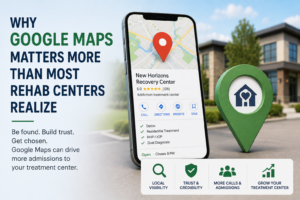
A well-optimized Google Business Profile, consistent local citations, and strong local SEO often determine whether a center appears during urgent searches.
Treating the Website Like a Brochure
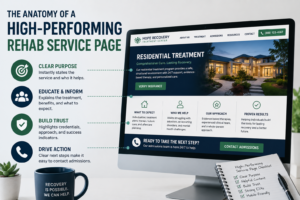
Today’s website must educate, reassure, answer objections, and simplify admissions.
Families expect detailed information about detox, residential treatment, outpatient services, dual diagnosis care, insurance, and the admissions process.
Focusing Only on Rankings
Search rankings matter.
Admissions matter more.
The best-performing treatment websites prioritize trust, clarity, user experience, and conversion optimization alongside visibility.
How Does This Affect Different Levels of Care?
Every behavioral health service line benefits from digital authority.
Whether your organization offers:
- Detox
- Residential treatment
- Partial Hospitalization Programs (PHP)
- Intensive Outpatient Programs (IOP)
- Medication-Assisted Treatment (MAT)
- Sober Living
- Mental Health Treatment
- Dual Diagnosis
- Teen Treatment
- Luxury Rehab
Families often research each service independently before contacting admissions.
This is why specialized SEO strategies for Addiction Treatment Centers, Detox Centers, Residential Rehab, Outpatient Rehab, PHP, IOP, MAT, Sober Living, Dual Diagnosis, Teen Rehab, Luxury Rehab, Mental Health Treatment, and broader Behavioral Health services create stronger visibility than relying on a single general website.
The New Trust Equation
Years ago, trust came primarily from professional referrals.
Today it comes from multiple reinforcing signals.
Families evaluate:
- Clinical expertise
- Licensing
- Accreditation
- Reviews
- Website quality
- Educational resources
- Staff transparency
- Community reputation
- Search visibility
- AI citations
- Local presence
- Consistency across platforms
Each trust signal strengthens the next.
This layered credibility significantly influences admissions decisions.
What Should Treatment Centers Do Differently?
Rather than replacing referral relationships, strengthen them with owned digital assets.
Successful organizations typically focus on several parallel strategies:
Develop comprehensive educational content that answers the questions families actually ask during the decision-making process.
Build topical authority around addiction treatment, detox, residential care, outpatient treatment, mental health, and co-occurring disorders.
Invest in local SEO and Google Business Profile optimization so nearby families can find your services during urgent searches.
Improve website user experience by making admissions information, insurance details, contact options, and treatment explanations easy to access.
Manage online reputation consistently through ethical review generation and ongoing engagement.
Create content that AI systems can confidently summarize by providing clear answers, expert explanations, and trustworthy information.
Maintain and expand referral partnerships while reducing dependence on any single source of admissions.
The Organizations That Will Lead the Next Decade
Behavioral health marketing is becoming less about isolated tactics and more about building organizational authority.
The providers that consistently grow admissions are rarely the ones with only the biggest advertising budgets.
They are the organizations that become trusted educational resources.
They answer questions before families ask.
They appear wherever people search.
They demonstrate expertise rather than simply claiming it.
They support referral partners with educational resources instead of relying solely on relationship history.
Most importantly, they create multiple pathways for families to discover them, trust them, and confidently reach out for help.
That resilience becomes increasingly valuable as search technology, AI, and patient expectations continue to evolve.
Frequently Asked Questions
Are referral relationships still important for addiction treatment centers?
Absolutely. Referral relationships remain one of the highest-quality admissions sources. However, they should be part of a broader growth strategy rather than the only source of new patients.
Why are referrals producing fewer admissions than they used to?
Families now conduct extensive online research before choosing a provider. Even referred patients often compare multiple treatment centers before making a decision.
How does SEO support referral relationships?
SEO reinforces credibility by making it easier for referred families to find your website, learn about your services, verify your reputation, and feel confident contacting your admissions team.
What role does AI search play in behavioral health marketing?
AI search tools summarize trusted information from across the web. Organizations with strong educational content, topical authority, and trustworthy digital signals are more likely to be referenced.
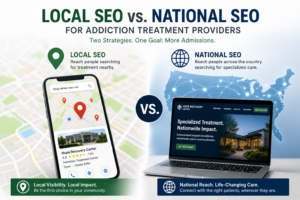
Should treatment centers prioritize local SEO or national SEO?
Most organizations benefit from both. Local SEO helps nearby families find care, while national SEO expands visibility for programs that accept out-of-state clients or specialize in niche treatment services.
What digital trust signals influence admissions decisions?
Reviews, accreditation, clinical credentials, educational content, Google Business Profile optimization, transparent staff information, website quality, and consistent branding all contribute to trust.
Can a treatment center grow without paid advertising?
Yes. Strong organic SEO, referral development, reputation management, local visibility, and authoritative educational content can create sustainable admissions growth over time.
Why is website content so important for behavioral health providers?
Families often make emotionally significant decisions under stressful circumstances. Clear, informative content helps answer questions, reduce uncertainty, and build confidence before they contact admissions.
How often should treatment centers update their marketing strategy?
Behavioral health organizations should review performance regularly and adapt as search behavior, AI technology, competition, and patient expectations evolve.
What is the biggest mistake treatment centers make with admissions marketing?
Relying too heavily on one acquisition channel. Diversifying admissions sources through referrals, SEO, local visibility, reputation management, and educational content creates greater long-term stability and resilience.