Google does not rank addiction treatment websites because they repeat “drug rehab” more often than competitors.
For treatment centers, the stronger question is whether the website provides useful, trustworthy, relevant information that genuinely helps someone understand treatment and make an informed decision.
That standard matters even more in behavioral health because addiction treatment content can affect a person’s health and well-being. Google describes these subjects as Your Money or Your Life (YMYL) topics and says its systems give greater weight to signals associated with strong E-E-A-T for these subjects.
For The Rehab SEO Specialists, successful Addiction Treatment Center SEO therefore starts with credibility—not keyword density.
What Does Google Look for in an Addiction Treatment Website?
There is no single “rehab ranking factor.”
Google uses many systems and signals to identify relevant, useful results. Its own guidance emphasizes helpful, reliable, people-first content, originality, demonstrated knowledge, trust, and a satisfying page experience.
For treatment organizations, several areas deserve particular attention.
1. Trust Comes First
Google specifically says trust is the most important component of E-E-A-T.
That has major implications for addiction treatment websites.
A family should be able to determine:
- Who operates the organization?
- Where is treatment provided?
- What levels of care are actually available?
- Who creates or reviews clinical information?
- How can admissions be contacted?
- What claims can be independently verified?
Treatment websites should make these answers easy to find.
Clinical credentials, legitimate facility information, transparent authorship, accurate service descriptions, and responsible health claims are not merely conversion elements. They create a more trustworthy digital presence.
2. Helpful Content Beats Content Written for Rankings
Google explicitly recommends creating content primarily for people rather than content designed mainly to attract search traffic. It also encourages original analysis and information that goes beyond what competing pages already say.
That means publishing another generic 2,000-word article about “What Is Alcohol Addiction?” may accomplish very little if it adds nothing useful.
Strong behavioral health content answers real questions families ask:
What happens during detox?
When is residential treatment appropriate?
How is PHP different from IOP?
Can someone receive treatment for addiction and a mental health disorder simultaneously?
What happens when I call admissions?
This creates topical depth naturally across Detox Center SEO, Residential Rehab SEO, PHP SEO, IOP SEO, MAT SEO, Dual Diagnosis SEO, and broader Behavioral Health SEO.
3. Your Website Should Demonstrate Real Treatment Expertise
Google encourages publishers to make authorship clear and provide information about the people responsible for content.
For behavioral health organizations, clinical content should not feel disconnected from the professionals delivering care.
Where appropriate, treatment organizations should clearly identify authors, clinical reviewers, credentials, and sources.
The objective is not adding an “expert reviewed” badge to every page.
It is demonstrating that health information comes from an organization with legitimate knowledge of the subject.
4. Google Needs to Understand Each Facility and Service
Multi-location organizations frequently create unnecessary ambiguity.
One facility provides detox. Another provides residential care. A third offers PHP and IOP.
Yet every page says essentially the same thing.
A clearer website architecture establishes relationships such as:
Organization → Facility → Level of Care → Treatment Program → Geographic Market
Dedicated service and location pages help users understand those relationships and can also make the organization’s treatment footprint clearer to search systems.
Accuracy matters more than trying to make every location rank for every treatment keyword.
5. Local Visibility Matters
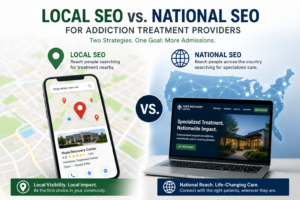
For geographically focused searches, the website is only one component of visibility.
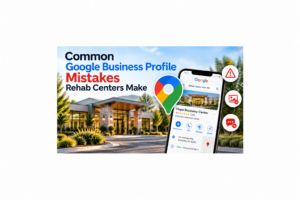
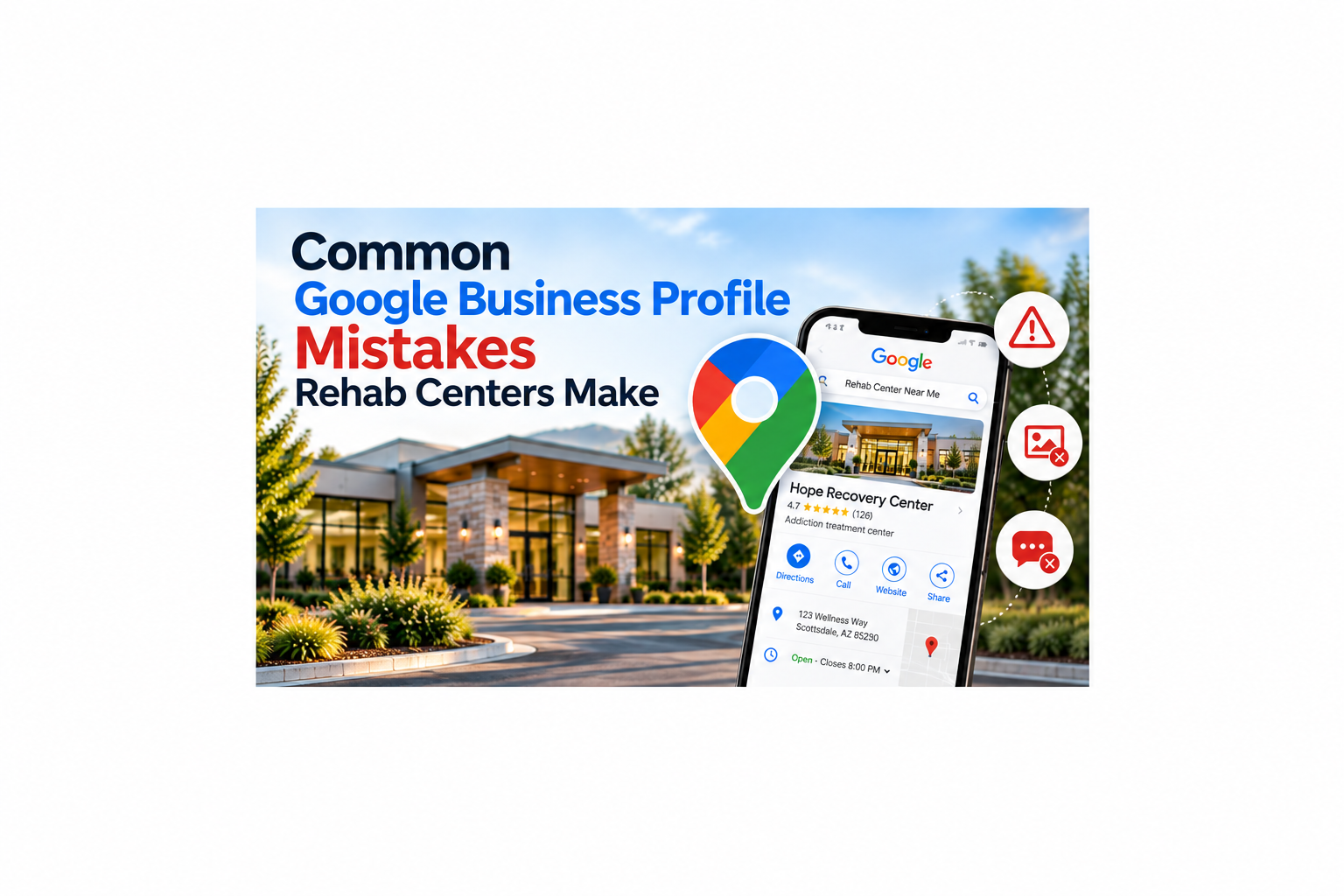
Location pages, Google Business Profiles, accurate facility information, reviews, and consistent business details all contribute to the broader local presence prospective patients encounter.
A person searching for “detox near me” may discover a facility through Google Maps before visiting the website.
The profile and website should therefore tell the same story.
6. User Experience Cannot Be Ignored
A great article loses value when the website is frustrating to use.
Google says its ranking systems consider multiple aspects of overall page experience and specifically recommends attention to Core Web Vitals, mobile usability, security, intrusive interstitials, and whether users can easily distinguish the main content.
For treatment centers, user experience also has an admissions dimension.
Someone seeking help should be able to quickly find treatment information, locations, insurance guidance, and a clear way to contact admissions.
Do not make a person in a high-stress situation fight the website.
7. Reputation and Authority Extend Beyond Your Website
A treatment organization does not establish authority simply by calling itself a “leading rehab.”
Real authority is supported by the broader footprint surrounding the organization.
Facility information, legitimate professional credentials, relevant third-party references, local presence, reviews, useful content, and other credible signals can collectively strengthen trust.
The strategic lesson is simple:
Do not manufacture authority. Build evidence of it.
What Should Treatment Centers Do Differently?
Stop optimizing individual pages in isolation.
Build a digital presence in which the organization, clinicians, facilities, treatment programs, locations, educational resources, Google Business Profiles, and reputation signals reinforce one another.
Then measure more than rankings.
Look at qualified calls, treatment inquiries, geographic demand, service-line conversions, and admissions opportunities.
Google traffic only becomes valuable to a treatment organization when it helps appropriate patients and families find trustworthy care.
Organizations that want to strengthen their organic visibility, local presence, content authority, and AI search readiness can schedule a free consultation with The Rehab SEO Specialists.
Frequently Asked Questions
Does Google treat addiction treatment as YMYL content?
Health-related topics can fall within Google’s YMYL framework because inaccurate information could affect people’s health or well-being. Google says stronger E-E-A-T considerations receive greater weight for such topics.
Is E-E-A-T a direct Google ranking factor?
Not exactly. Google says E-E-A-T itself is not a specific ranking factor; its systems use various signals that can identify content demonstrating aspects of E-E-A-T.
Does every treatment article need a clinical reviewer?
Not necessarily. But medical or clinical claims should be accurate, responsibly sourced, and supported by appropriate expertise.
Does Google prefer longer rehab content?
No fixed word count guarantees better rankings. Google explicitly warns against writing to a particular word count because someone claims Google prefers it.
Are backlinks still important?
Links can contribute to how Google understands pages and authority, but they should not be treated as a substitute for useful content, trust, relevance, or legitimate organizational credibility.
Do location pages help treatment centers rank?
Strong location pages can help establish the relevance of legitimate facilities and provide useful information for geographically focused searches.
Does page speed matter?
Page experience matters, and Google says Core Web Vitals are used by its ranking systems. However, excellent technical scores alone do not guarantee top rankings.
Can AI-generated content rank?
The more important issue is quality and purpose. Google emphasizes helpful, reliable, people-first content and warns against using automation primarily to manipulate search rankings.
What is the biggest SEO mistake addiction treatment centers make?
Building for search engines before building for patients and families. A strong strategy should make the organization easier to find, understand, verify, trust, and contact.
What should rehab centers prioritize first?
Start with trust, accurate treatment information, strong facility and service architecture, useful content, local visibility, and a website experience that makes the next step clear.