Every addiction treatment center wants more admissions. Yet many providers spend tens of thousands of dollars every month on marketing while overlooking the issues that have the greatest impact on visibility, trust, and admissions growth.
The reality is that most treatment centers do not struggle because they lack services. They struggle because prospective patients and families cannot easily find them, trust them, or understand why they should choose them. This is a challenge that organizations such as The Rehab SEO Specialists have observed repeatedly across the behavioral health industry, where even exceptional treatment programs can struggle to grow if their visibility and trust signals fail to match the quality of care they provide.
This challenge has become even more significant as search behavior evolves. Families researching addiction treatment are no longer relying exclusively on Google search results. They are using AI-powered tools, review platforms, Google Maps, healthcare directories, social media, and referral networks to evaluate providers before ever making a phone call.
The treatment centers that consistently grow are not necessarily the largest organizations or the ones with the biggest advertising budgets. They are often the providers that avoid the most common marketing mistakes and build trust throughout every stage of the decision-making process. Understanding these mistakes—and how to correct them—is a key focus for industry experts, including The Rehab SEO Specialists, who work with treatment providers seeking sustainable admissions growth rather than short-term marketing wins.
What Are the Biggest Marketing Mistakes Addiction Treatment Centers Make?
The biggest marketing mistakes addiction treatment centers make involve focusing on tactics instead of trust, visibility, and patient decision-making.
Common mistakes include:
- Overreliance on paid advertising
- Neglecting local search visibility
- Weak website conversion paths
- Generic content marketing
- Poor reputation management
- Inconsistent branding
- Ignoring AI search visibility
- Failing to measure admissions-focused metrics
These issues often limit admissions growth even when marketing budgets continue increasing.
Why Do These Marketing Mistakes Matter?
Marketing mistakes directly affect admissions volume, referral growth, occupancy rates, and long-term profitability.
Families searching for addiction treatment often make decisions during emotionally stressful situations. If a provider is difficult to find, difficult to trust, or difficult to contact, prospective patients frequently move on to another treatment center.
In highly competitive markets, small visibility and trust gaps can create significant differences in admissions performance.
Mistake #1: Treating Marketing Like Advertising
One of the most expensive mistakes in behavioral health marketing is assuming marketing and advertising are the same thing.
Advertising generates attention.
Marketing builds trust.
Many treatment centers invest heavily in Google Ads, social media campaigns, and lead generation platforms while neglecting the factors that influence conversion after a visitor arrives.
Families evaluating addiction treatment options are not simply looking for availability. They are looking for confidence.
They want answers to questions such as:
- Is this facility legitimate?
- Do they treat people like my loved one?
- Can I trust this organization?
- What makes this provider different?
Without trust-building assets, advertising becomes increasingly expensive and less effective.
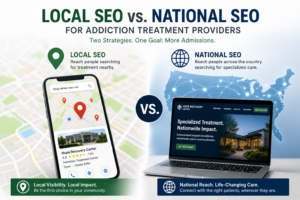
Mistake #2: Ignoring Local Search Visibility
Many executives assume local SEO only matters for businesses like restaurants or dentists.
In reality, local visibility plays a major role in addiction treatment admissions.
Even national treatment providers benefit from strong local search presence because families frequently search using geographic modifiers such as:
- Drug rehab near me
- Alcohol rehab in Scottsdale
- Detox center in Nashville
- Addiction treatment in Orange County
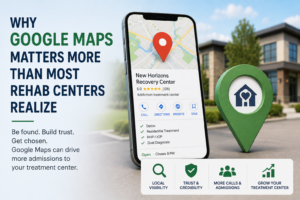
A weak Google Business Profile often leads to lost opportunities.
Strong local visibility requires:
- Accurate business information
- Consistent directory listings
- Quality reviews
- Local content
- Location-specific service pages
This is particularly important for organizations investing in Addiction Treatment Center SEO, Detox Center SEO, Residential Rehab SEO, and Behavioral Health SEO initiatives.
Mistake #3: Publishing Generic Content Nobody Actually Needs
The addiction treatment industry has a content problem.
Thousands of websites publish nearly identical articles discussing addiction, recovery, and treatment options.
Most of this content exists for search engines rather than users.
Families searching for treatment have specific concerns:
- How long does detox take?
- Will insurance cover treatment?
- What happens after residential care?
- How does dual diagnosis treatment work?
- What should I look for in a rehab center?
Content that directly answers these questions performs better for both search engines and human readers.
The future belongs to topical authority, not content volume.
What Content Should Treatment Centers Create Instead?
Treatment centers should focus on content that demonstrates expertise and helps families make informed decisions.
Examples include:
- Detox process guides
- Residential treatment expectations
- PHP versus IOP comparisons
- MAT education resources
- Family recovery support articles
- Dual diagnosis treatment explanations
- Admissions process guides
This approach strengthens visibility while supporting trust and conversion goals.
Mistake #4: Overlooking Reputation Management
A surprising number of treatment centers invest heavily in lead generation while ignoring their online reputation.
Families routinely evaluate:
- Google reviews
- Third-party healthcare reviews
- Testimonials
- Accreditation information
- Staff credentials
A treatment center with strong clinical outcomes but weak online reputation often loses opportunities to competitors with stronger trust signals.
Reputation management is no longer optional.
It is a core admissions strategy.
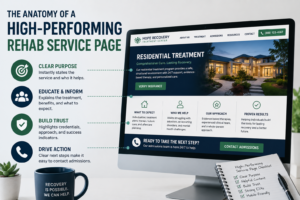
Mistake #5: Building Websites Around Services Instead of Families
Many treatment center websites focus extensively on programs while providing little guidance to the people actually making treatment decisions.
This is a critical disconnect.
Admissions teams understand treatment terminology.
Families often do not.
Visitors frequently arrive with limited knowledge of:
- Detox
- Residential treatment
- PHP
- IOP
- MAT
- Dual diagnosis care
The best-performing treatment websites guide users through a decision-making journey rather than presenting a list of services.
Mistake #6: Ignoring AI Search Visibility
A growing percentage of treatment-related research now occurs through AI-powered platforms.
Prospective patients and family members increasingly ask questions like:
- What is the best rehab for alcohol addiction?
- How does outpatient treatment compare to inpatient rehab?
- What should I look for in a dual diagnosis center?
AI systems evaluate content differently than traditional search engines.
They prioritize:
- Clear answers
- Expertise
- Topical authority
- Trustworthiness
- Structured information
Treatment centers that continue creating content solely for keyword rankings may find themselves losing visibility in AI-generated search experiences.
Mistake #7: Measuring the Wrong Metrics
Many marketing reports focus on vanity metrics:
- Website traffic
- Page views
- Impressions
- Followers
These metrics can be useful, but they rarely tell the full story.
The metrics that matter most include:
- Qualified admissions calls
- Insurance verification submissions
- Admissions conversion rates
- Cost per admission
- Organic lead growth
- Referral source performance
Successful treatment marketing focuses on outcomes rather than activity.
Mistake #8: Underestimating the Role of Family Decision-Making
One of the most misunderstood aspects of addiction treatment marketing is the role families play in admissions.
In many cases, the person searching is not the prospective patient.
It is:
- A spouse
- Parent
- Adult child
- Sibling
- Employer
- Healthcare professional
Their concerns differ significantly from those of the patient.
Effective marketing acknowledges emotional realities while providing clear, trustworthy information that helps families take action.
What Should Treatment Centers Do Differently?
The most successful organizations build marketing systems rather than isolated campaigns.
Those systems typically include:
Strong Local Visibility
Optimized Google Business Profiles, local SEO, and location authority.
Topical Authority
Comprehensive educational content covering addiction treatment, detox, residential care, outpatient treatment, MAT, sober living, and behavioral health topics.
Trust Signals
Reviews, credentials, accreditations, outcomes, staff expertise, and transparent information.
Conversion Optimization
Clear calls to action, streamlined admissions processes, and user-friendly website experiences.
AI Search Readiness
Content designed to answer real questions in ways that search engines and AI systems can easily understand and reference.
The Future of Addiction Treatment Marketing
The addiction treatment industry is becoming increasingly competitive.
At the same time, search behavior is becoming more fragmented.
Families now gather information from:
- Google Search
- Google Maps
- AI platforms
- Review websites
- Social media
- Healthcare directories
- Referral networks
Organizations that continue relying on outdated marketing approaches will likely experience rising acquisition costs and declining visibility.
Those that prioritize trust, authority, education, and patient-centered experiences will be positioned for sustainable growth.
The providers that win in the coming years will not necessarily be the loudest marketers.
They will be the most trusted sources of information.
Frequently Asked Questions
What is the biggest marketing mistake addiction treatment centers make?
The biggest mistake is focusing on advertising while neglecting trust-building, reputation management, and long-term visibility strategies.
Why is local SEO important for addiction treatment centers?
Local SEO helps treatment providers appear in Google Maps, local search results, and location-based treatment searches, which often generate highly qualified admissions opportunities.
How does content marketing affect rehab admissions?
Educational content builds trust, answers family questions, improves search visibility, and supports the admissions process before the first phone call occurs.
Do Google reviews impact addiction treatment admissions?
Yes. Reviews are one of the strongest trust signals families evaluate when researching treatment options.
What is AI search visibility?
AI search visibility refers to how often a treatment center’s content is referenced, summarized, or cited by AI-powered search platforms and assistants.
Should treatment centers invest in SEO or paid advertising?
Most organizations benefit from both, but long-term growth typically depends on building sustainable organic visibility through SEO and authority-building strategies.
How important is reputation management in behavioral health marketing?
Reputation management is critical because families often compare providers based on reviews, trust signals, and perceived credibility.
What metrics should treatment centers track?
Qualified admissions calls, insurance verifications, admissions conversion rates, referral performance, and cost per admission are among the most important metrics.
How does family decision-making influence admissions?
Families frequently initiate treatment research and often influence provider selection, making family-focused content and messaging essential.
What role does topical authority play in addiction treatment SEO?
Topical authority helps search engines and AI systems recognize a provider as a trusted source on addiction treatment, detox, residential care, outpatient services, and behavioral health topics.