Finding addiction or mental health treatment no longer starts with a phone book or a referral alone. Today’s families begin their search online, comparing treatment options, reading reviews, asking AI-powered search tools questions, and evaluating providers before they ever contact an admissions team. For behavioral health organizations, understanding this new search journey is critical. The providers that appear early, answer questions clearly, and build trust throughout the process are far more likely to receive qualified admissions than those that rely solely on traditional marketing or referrals.
What Is the New Behavioral Health Search Journey?
The behavioral health search journey is the path families take from recognizing a need for treatment to choosing a provider.
Rather than searching for a single phrase like “drug rehab near me,” people now ask detailed questions such as:
- Which rehab center accepts my insurance?
- Is detox necessary before residential treatment?
- What’s the difference between PHP and IOP?
- Which treatment center specializes in dual diagnosis?
- How long does addiction treatment take?
Many of these questions are now asked through Google AI Overviews, ChatGPT, Gemini, and other AI search platforms.
Why Does It Matter?
Families rarely make decisions after visiting one website.
Instead, they compare several treatment providers, review testimonials, explore Google Business Profiles, read educational articles, and evaluate whether a center appears trustworthy.
If your organization isn’t visible during these moments, you’re unlikely to be part of the final decision.
How Search Behavior Has Changed
The most successful treatment centers recognize that today’s search journey is built on education and trust.
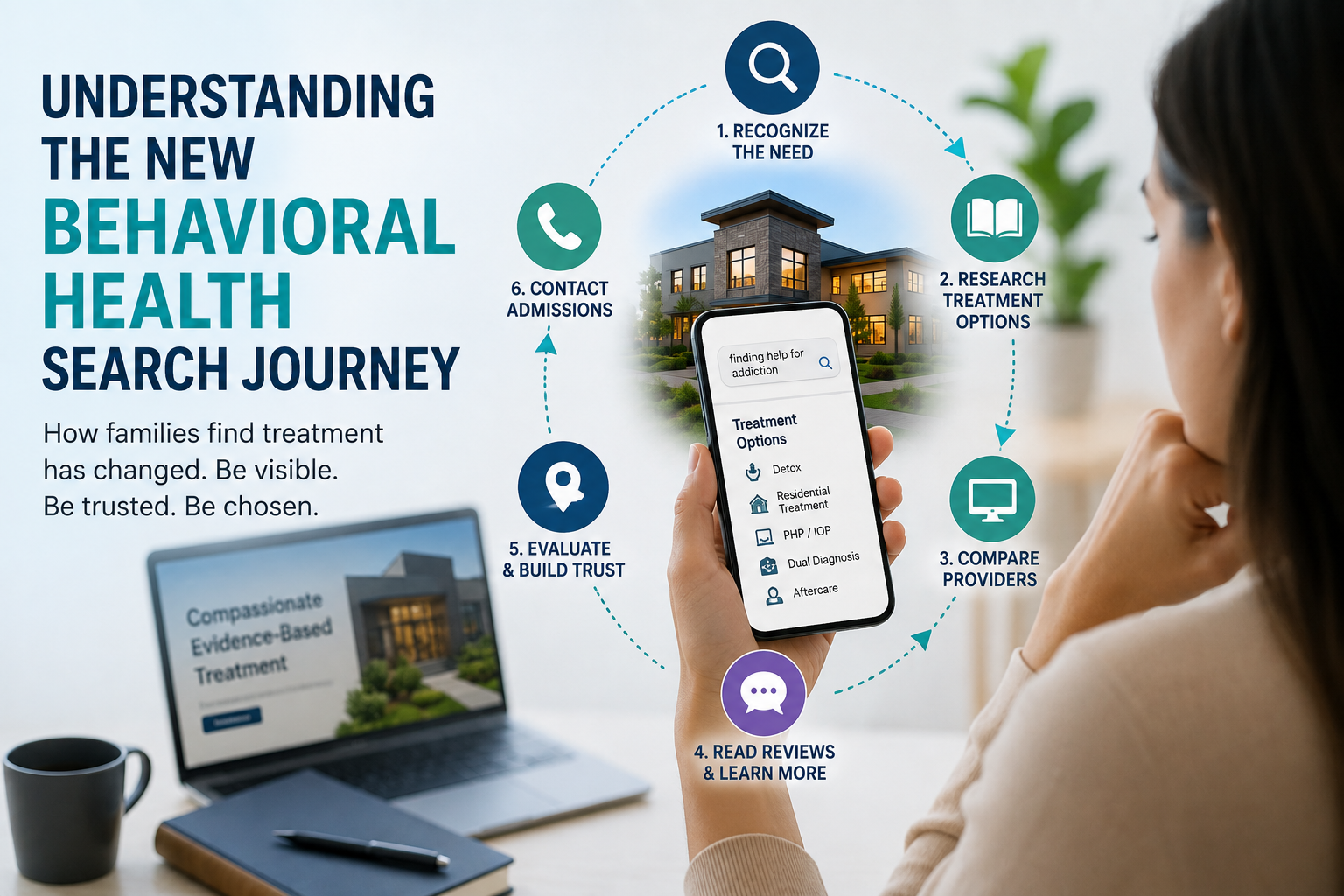
Families often move through these stages:
Recognizing the Need
Someone realizes professional help may be necessary for addiction or mental health concerns.
Researching Treatment Options
They begin learning about detox, residential treatment, outpatient rehab, MAT, dual diagnosis, and other levels of care.
Comparing Providers
They evaluate multiple organizations by reviewing:
- Online reviews
- Staff credentials
- Website quality
- Google Maps listings
- Treatment specialties
- Insurance information
Contacting Admissions
Only after building confidence do most families reach out to schedule an assessment or verify insurance.
Common Mistakes Treatment Centers Make
Many providers lose visibility because they:
- Focus only on promoting their facility instead of answering patient questions.
- Publish generic content that offers little value.
- Ignore Google Business Profile optimization.
- Treat SEO as a one-time project instead of an ongoing strategy.
- Overlook the growing influence of AI-powered search.
What Treatment Centers Should Do Differently
Organizations that consistently generate admissions focus on becoming trusted educational resources.
That means investing in:
- Helpful content that answers real questions.
- Strong local and national SEO.
- Reputation management.
- Fast, user-friendly websites.
- Service-specific pages for Detox, Residential Treatment, PHP, IOP, MAT, Dual Diagnosis, and Mental Health Treatment.
- AI-friendly content that demonstrates expertise and authority.
This approach helps improve visibility while giving families the confidence to choose your organization.
Why AI Search Is Reshaping Behavioral Health Marketing
AI platforms are changing how people discover treatment providers.
Instead of displaying only a list of websites, AI tools summarize information and recommend trusted sources. Treatment centers that consistently publish accurate, comprehensive content are more likely to be referenced in these responses.
This makes quality, credibility, and topical authority more important than simply ranking for a handful of keywords.
Building Long-Term Visibility
Sustainable admissions growth comes from meeting families wherever they search. Whether someone is looking for Addiction Treatment, Drug Rehab, Alcohol Rehab, Detox, Residential Treatment, IOP, PHP, MAT, Sober Living, or Behavioral Health services, your organization should provide clear answers that build trust throughout the decision-making process.
Organizations that invest in educational content, local visibility, reputation management, and AI search readiness position themselves for long-term success.
Helping Behavioral Health Providers Stay Visible
At The Rehab SEO Specialists, we help addiction treatment centers and behavioral health organizations improve their online visibility through strategic SEO, AI search optimization, local search, and content built specifically for the behavioral health industry.
If your organization is ready to attract more qualified admissions and strengthen its digital presence, schedule a free consultation to discuss a customized growth strategy.
Frequently Asked Questions
What is the behavioral health search journey?
It is the process families follow from recognizing a need for treatment to researching providers and choosing a rehab or behavioral health organization.
Why has the search journey changed?
People now rely on search engines, AI tools, reviews, and educational content before contacting an admissions team.
Does SEO affect admissions?
Yes. Better visibility helps treatment centers attract more qualified visitors who are actively seeking care.
How important is Google Business Profile?
It plays a major role in local search visibility, Google Maps rankings, and building trust with prospective patients.
Why should treatment centers create educational content?
Helpful content answers common questions, builds credibility, and improves visibility in both traditional and AI-powered search.
How does AI search impact treatment providers?
AI platforms recommend organizations that demonstrate expertise, trustworthiness, and comprehensive topic coverage.
Should every level of care have its own page?
Yes. Dedicated pages for Detox, Residential Treatment, PHP, IOP, MAT, Dual Diagnosis, and other services better match search intent and improve SEO.
What is the biggest mistake behavioral health providers make?
Many focus on promoting their services instead of educating families. The organizations that answer questions first are more likely to earn trust and generate admissions.